 blog
blog
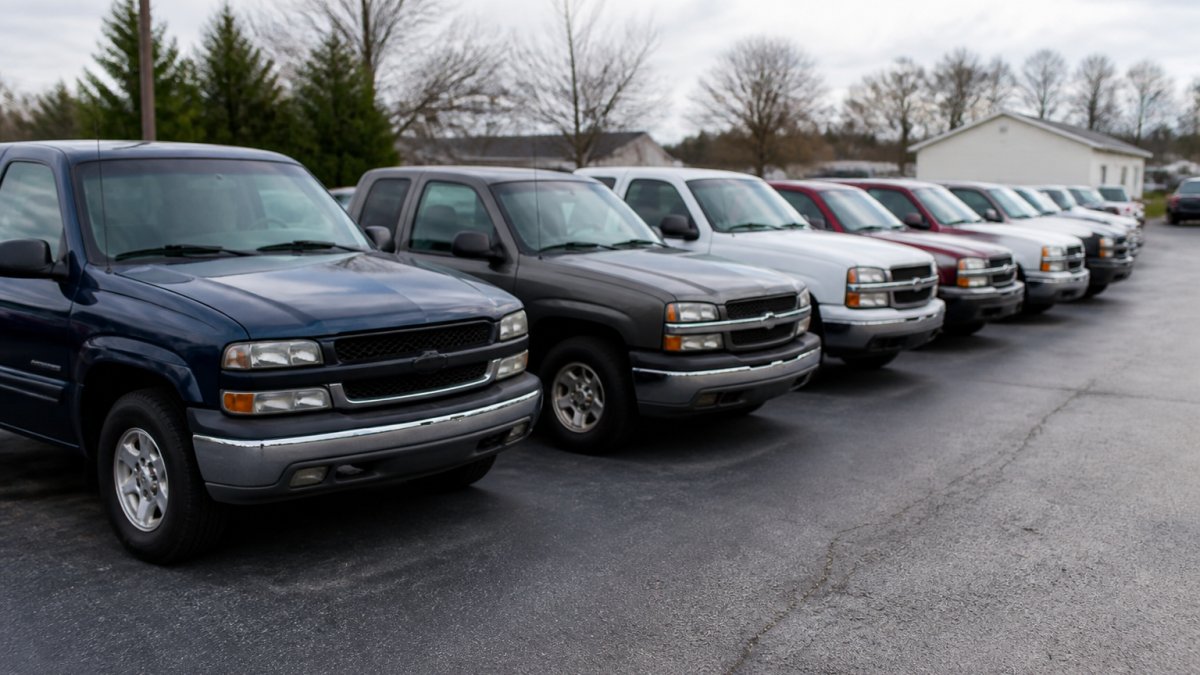
Best Reliable Used Trucks Under $20K
Table of Contents
- What Makes a Used Truck Reliable Under $20,000
- Most Reliable Used Pickup Trucks Under $20,000
- Used Truck Inspection Checklist Before You Buy
- Used Trucks for Towing Under $20,000
- Understanding Used Truck Maintenance Costs
- Mileage, Age, and Total Cost of Ownership
- Avoiding Hidden Issues: Recalls and Accident History
- Frequently Asked Questions
Last Updated: October 5, 2026
What Makes a Used Truck Reliable Under $20,000
Finding reliable used trucks under 20k means knowing what separates vehicles that hold up from those that drain your wallet. At AutoMatch USA INC, we've helped many buyers navigate this, and the key is spotting reliability before you buy.
Reliability in this price range depends on three factors: original build quality, how well the previous owner maintained it, and which model years avoid known defects.
Most buyers focus only on price and mileage. That's a mistake. A well-maintained truck from a reliable model year delivers years of dependable service; a neglected one becomes an expensive liability within months.
Most Reliable Used Pickup Trucks Under $20,000
Toyota Tacoma (2010-2015): Known for exceptional longevity, with many owners reporting 200,000+ miles on routine maintenance.
Ford F-150 (2009-2014, Regular or SuperCrew): The F-150 dominates used truck markets for good reason, handling heavy work with multiple engine options.
Chevrolet Silverado 1500 (2007-2013): A solid full-size option with strong towing capacity and workhorse durability when maintained.
Dodge Ram 1500 (2009-2012): Known for comfortable cabins and good towing specs. Transmission issues appeared in some years, so verify service history.
Full-Size vs. Midsize Pickups in This Price Range
The choice between full-size and midsize pickups depends on your actual needs. Full-size trucks like the F-150 and Silverado offer more towing capacity and payload but consume more fuel and cost slightly more to maintain.
In the under-$20,000 market, full-size trucks often have higher mileage because they're older. Midsize trucks, particularly Tacomas, hold value aggressively, so you'll find fewer miles but fewer options. If you need 10,000+ pounds of towing, go full-size.
Engine Options and Durability
Engine choice significantly affects long-term reliability and operating costs. V6 engines are more fuel-efficient but less powerful; V8s consume more fuel but provide stronger performance and towing. Turbocharged engines require more careful maintenance.
Among reliable used trucks under 20k, the Toyota 2.7L four-cylinder (Tacoma) and Ford 5.0L V8 (F-150) are proven workhorses. The Chevrolet 5.3L V8 and Dodge 5.7L V8 also have solid track records when properly maintained.
Used Truck Inspection Checklist Before You Buy
Before committing to any used truck, perform a thorough inspection.
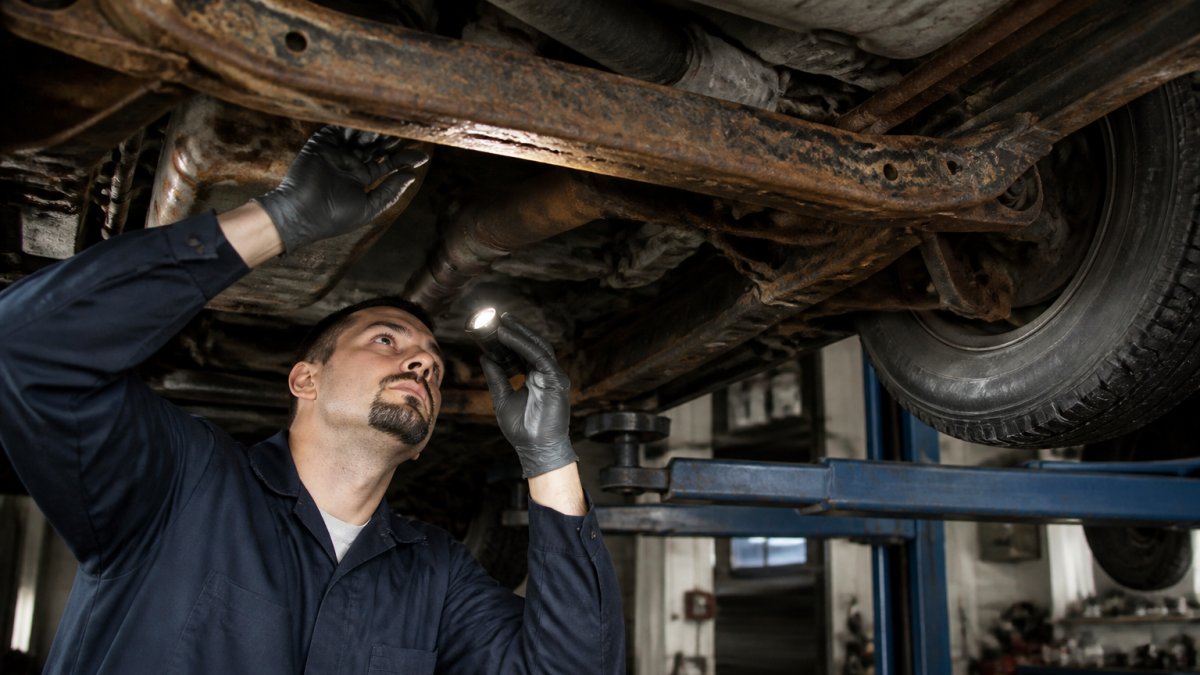
Frame and Rust: Get under the truck with a flashlight.
Engine Condition: Start the engine cold and listen for unusual noises.
Transmission: Shift through all gears while parked, then drive and test acceleration.
Suspension and Steering: Drive over bumps and listen for clunking.
Electrical Systems: Test all lights, wipers, windows, and locks. Check the battery date.
Tires: Check tread depth and look for uneven wear.
Vehicle History: Obtain a vehicle history report.
Used Trucks for Towing Under $20,000
If towing is your priority, capacity and engine configuration matter more than model year. Not all trucks in your budget handle serious towing safely.
Towing Capacity and Payload Ratings
Towing capacity varies dramatically between models and engines. A full-size V8 might tow 10,000 pounds; a smaller V6 might max out at 5,000. Payload capacity is separate: a truck that tows 8,000 pounds might only carry 1,500 pounds in the bed.
Check the door jamb sticker or owner's manual for exact ratings. Never exceed these limits. Overloading causes transmission failure, suspension damage, and brake problems.
Transmission and Engine Considerations for Towing
Towing puts tremendous stress on the engine and transmission. Automatics are essential; manual trucks require constant downshifting and overheat easily under load. A transmission cooler is ideal for regular towing.
V8 engines handle towing better than V6s in this price range, putting less strain on the engine with a loaded trailer. If the truck has been used for towing, verify regular transmission fluid changes and coolant flushes; neglected maintenance means imminent transmission failure.
Understanding Used Truck Maintenance Costs
Purchase price is only the entry fee. Trucks that fit a $20,000 budget are typically 10-15 years old with 100,000-150,000 miles, the steepest part of the maintenance curve. Budgeting for that curve separates a truck that stays affordable from one that drains your savings.
What Routine Maintenance Actually Costs
Routine items are predictable and cheap relative to repairs:
- Oil and filter change: $40-$90 at an independent shop, more at a dealer. Full-size V8 trucks take more oil than midsize four-cylinders.
- Air filter: $15-$40, usually a DIY job.
- Tire rotation: $20-$50, or free where you bought the tires.
- Spark plugs: $150-$400 installed, depending on engine and how buried the plugs are.
- Coolant flush: $100-$200.
- Transmission fluid service: $150-$300 for a drain-and-fill; a full flush runs higher.
On a well-maintained truck, routine maintenance alone often runs $600-$1,200 per year. That is the floor, not the ceiling.
Where the Real Money Goes
Wear items and repairs are where budgets break:
- Brake job (pads and rotors, all four): $600-$1,200 on a full-size truck.
- Tires (set of four): $700-$1,400 installed, depending on size and load rating.
- Battery: $150-$300 installed.
- Shocks and struts: $400-$900 installed.
- Water pump: $400-$800, often bundled with a timing belt job on interference engines.
- Alternator: $300-$700 installed.
- Starter: $300-$600 installed.
- Transmission rebuild or replacement: $2,500-$5,000+, the single biggest reason a cheap truck becomes an expensive one.
A common pattern is that a buyer spends $15,000 on a truck and then faces $3,000-$5,000 in deferred maintenance in the first 18 months. That is why service records matter more than a low odometer reading.
A Realistic Five-Year Budget
For a $15,000-$20,000 truck, plan on the following annual averages over five years:
| Category | Annual Estimate |
|---|---|
| Routine maintenance | $600-$1,200 |
| Wear items (tires, brakes, battery) | $500-$900 |
| Unexpected repairs | $800-$2,000 |
| Fuel (12,000 miles/year) | $2,000-$3,500 |
| Insurance | $1,200-$2,400 |
| Registration and taxes | $150-$500 |
That puts realistic annual ownership in the $5,000-$10,000 range before any major failure. A truck with no service history should be assumed to need at least one major repair in the first two years.
How to Keep Costs Down
- Buy the truck with the best service records you can find, even if it costs more up front.
- Get a pre-purchase inspection from an independent mechanic who does not sell vehicles.
- Handle small issues before they cascade; a $200 water pump today prevents a $2,000 head gasket job later.
- Choose a model with cheap, widely available parts. Full-size domestic trucks generally win here.
- Avoid turbocharged and complex engines in this price range unless you have complete documentation.
Mileage, Age, and Total Cost of Ownership
In the under-$20,000 market, you're typically looking at trucks 10-15 years old with 100,000-150,000 miles. Don't let mileage alone dictate your choice: a 2015 truck with 140,000 well-maintained miles beats a 2012 with 120,000 miles of neglect.
Total cost of ownership includes purchase price plus maintenance, repairs, fuel, and insurance.
Calculate realistic fuel costs based on actual mileage. A V8 full-size averaging 15 mpg costs significantly more to operate than a V6 midsize averaging 20 mpg; over 50,000 miles, that difference adds up.
Avoiding Hidden Issues: Recalls and Accident History
Two trucks can look identical on a lot yet carry completely different risk profiles depending on model year, engine, and transmission. Knowing which configurations to favor or avoid is the difference between a dependable workhorse and a recurring repair bill.
Model-Year-Specific Risks to Check
Reliability is not uniform across a generation; within the same nameplate, some years are notably stronger. Research the specific year and powertrain combination, not just the model.
- Toyota Tacoma (2010-2015): Generally strong, but early 2.7L four-cylinder trucks can develop timing chain noise and the 4.0L V6 has had occasional head gasket concerns at high mileage. Frame rust is the bigger issue on older Tacomas, especially in states that use road salt.
- Ford F-150 (2009-2014): The 5.0L V8 and 3.7L V6 are the safer bets. The 3.5L EcoBoost twin-turbo V6 in this era can suffer from timing chain stretch, turbo wastegate issues, and intercooler condensation problems. Avoid high-mileage EcoBoost trucks without full service records.
- Chevrolet Silverado 1500 (2007-2013): The 4.8L and 5.3L V8s are proven, but the 5.3L with Active Fuel Management (AFM) is known for lifter failure and oil consumption. The 4L60E four-speed automatic is the weak link; the later 6L80 six-speed is more durable.
- Dodge Ram 1500 (2009-2012): The 5.7L HEMI is strong, but the 545RFE and 65RFE transmissions have a history of valve body and solenoid issues. The 4.7L V8 is underpowered for towing and not as durable as the HEMI.
Recalls: What to Check and Why It Matters
Recalls aren't just about safety; they often reveal design weaknesses affecting long-term reliability. An unperformed recall leaves you with a known defect that fails on your watch.
Check every candidate truck's VIN against the NHTSA vehicle recall database. Look for:
- Open safety recalls that have never been repaired.
- Recalls related to fuel systems, brakes, airbags, and electrical components, which are the most common and the most consequential.
- Service campaigns that address durability issues even when they are not full safety recalls.
A truck with an open recall is not automatically a dealbreaker, but the repair should be completed before or shortly after purchase, and the seller should not be pricing it as if the issue does not exist.
Accident History and Frame Damage
Accident history matters more than many buyers realize. Even a moderate collision can affect frame alignment, electrical grounds, and long-term reliability in ways that don't show up until months later.
- Pull a vehicle history report from Carfax vehicle history service or a similar provider.
- Look for frame damage notations, salvage or rebuilt titles, and airbag deployment.
- A truck with one documented minor accident and full repair records is often a better buy than one with a clean report but no service history.
- Have an independent mechanic check frame straightness and panel gaps during the pre-purchase inspection.
Title and Ownership Red Flags
- Salvage title: The vehicle was declared a total loss. Resale value and insurability suffer.
- Rebuilt title: Repaired and re-titled. Acceptable only with thorough documentation and a clean inspection.
- Flood title: Corrosion and electrical gremlins can appear years later. Avoid in most cases.
- Lemon law buyback: Disclose and inspect carefully.
- Odometer discrepancies: A history report showing inconsistent mileage is a hard stop.
Frequently Asked Questions
What's the most dependable used truck to buy under $20,000?
Toyota Tacoma and Ford F-150 models from 2010-2015 rank highest for reliability in this price range. Toyota trucks typically have lower maintenance costs and better long-term durability. Honda Ridgeline is also dependable but less common in this budget. Check the vehicle history report, verify service records, and have a mechanic inspect the engine, transmission, and frame before purchase to confirm condition.
How many miles is too many for a used truck?
Trucks with 100,000-150,000 miles can still be reliable if well-maintained, especially Toyota and Honda models. Higher mileage (150,000+) is acceptable if service history is documented and a pre-purchase inspection confirms the engine and transmission are sound. Focus more on maintenance records and vehicle condition than raw mileage. A neglected truck with 80,000 miles may cost more to own than a well-serviced truck with 140,000 miles.
What should I check before buying a used pickup truck?
Start with a vehicle history report to verify accident history and title status. Have a certified mechanic inspect the engine, transmission, suspension, brakes, and frame for rust or damage. Check towing capacity and payload ratings against your needs. Test the four-wheel drive and electrical systems. Review service records for regular maintenance. Inspect the bed and undercarriage for rust, especially if the truck was used in salt or wet climates.
Which used truck is best for towing under $20,000?
Ford F-150 (2010-2015) with a V8 engine and automatic transmission offers strong towing capacity (up to 11,000 lbs depending on configuration) within budget. Dodge Ram 1500 is another option with competitive towing ratings. Verify the specific year, engine, and transmission match your towing needs, as capacity varies. Always confirm the truck has a factory towing package and check maintenance history, as towing puts extra stress on the transmission and engine.