 how-to
How to Spot Signs of Hidden Car Accident Damage
Last Updated: November 1, 2026
Quick Summary
Signs of hidden car accident damage include uneven gaps between body panels, paint that differs in color or shine, overspray on trim, and uneven tire wear or steering pull during a test drive. A vehicle history report and a pre-purchase inspection from an independent mechanic can confirm what a visual check misses.
- Walk the vehicle in good daylight and check for uneven gaps between doors, hood, and trunk.
- Look for overspray on rubber trim, window edges, or door seals.
- Uneven tread wear across tires often points to alignment trouble.
- A vehicle history report does not catch every repair, so pair it with a hands-on check.
- Ask an independent mechanic you trust for a pre-purchase inspection of the frame and undercarriage.
Table of Contents
- Check the Body Panels and Paint for Mismatches
- Inspect Tires, Steering, and Alignment Under Test Drive
- Review the Vehicle History and Get a Pre-Purchase Inspection Before You Buy
- Frequently Asked Questions
A car can look clean and still carry damage from a past collision, so knowing the signs of hidden car accident damage matters before you buy. At AutoMatch USA Inc., we help shoppers know what to check before they buy.
Check the Body Panels and Paint for Mismatches
Walk slowly around the vehicle in good daylight and look for signs that a panel has been repaired or replaced.
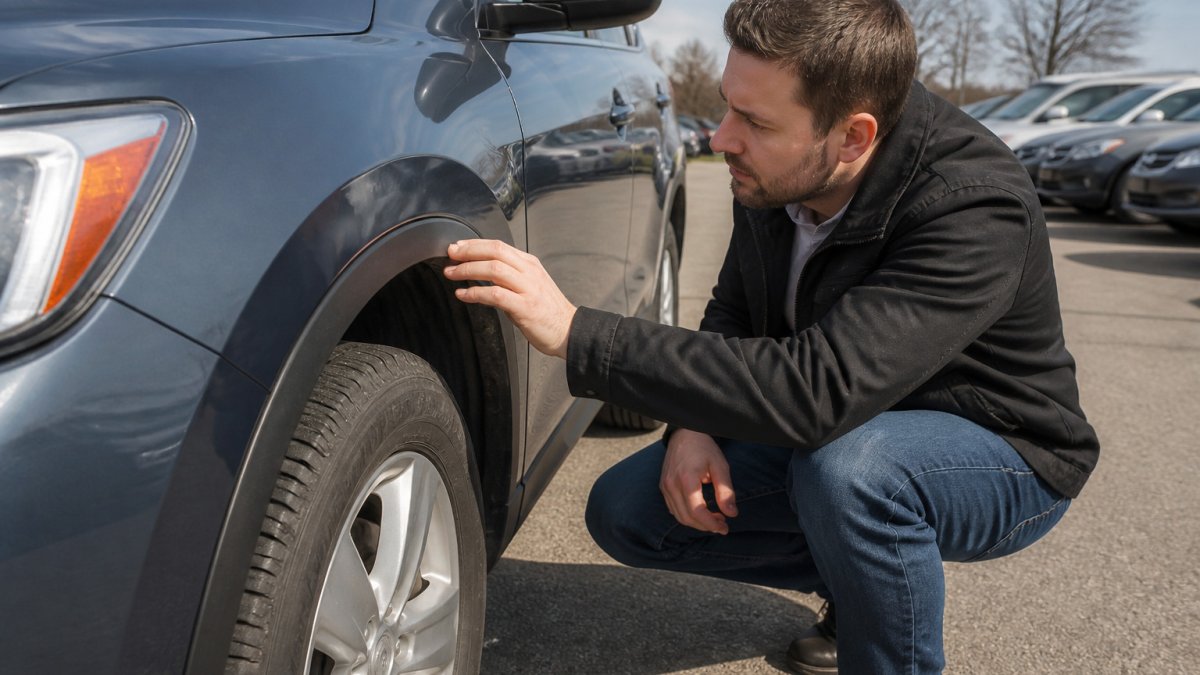
- Uneven gaps between doors, hood, and trunk
- Paint that looks different in color or shine from panel to panel
- Overspray on rubber trim, window edges, or door seals
- Bumpers or fenders sitting at a slightly different height
A fresh coat of paint can hide a repair, so when you look for signs of hidden car accident damage, check panel edges, not just the center.
Inspect Tires, Steering, and Alignment Under Test Drive
A short test drive can reveal problems a quick look will miss.
- Uneven tire wear across the tread often points to alignment trouble
- Steering that pulls to one side or feels loose
- Clunking, rattling, or creaking over bumps
- Vibration at normal highway speeds
- Warning lights on the dashboard after starting the engine
If you notice any of these, ask us about them before you decide.
A short test drive can reveal problems a quick look will miss. Here is what to watch for and what each sign can point to.
| Sign | What it can indicate | Next step |
|---|---|---|
| Uneven tire wear across the tread | Alignment trouble | Ask us about it before you decide |
| Steering that pulls to one side | Steering or alignment issue | Ask us about it before you decide |
| Loose steering feel | Steering issue | Ask us about it before you decide |
| Clunking, rattling, or creaking over bumps | Suspension or loose components | Ask us about it before you decide |
| Vibration at normal highway speeds | Drivetrain or wheel issue | Ask us about it before you decide |
| Warning lights after starting the engine | Possible system fault | Ask us about it before you decide |
Review the Vehicle History and Get a Pre-Purchase Inspection Before You Buy
A vehicle history report can show reported accidents, title issues, and past ownership (Used Cars). It does not catch every repair, so it works best alongside a hands-on check. Our step-by-step guide to verifying used car history walks you through each check before you commit.
Ask for a pre-purchase inspection from an independent mechanic you trust. A trained technician can check the frame, undercarriage, and suspension for damage that is not visible from the outside. Our guide on whether you can trust used car dealerships explains how to judge a seller's openness about a vehicle's past.
At AutoMatch USA Inc., we are happy to answer your questions about the vehicles we offer. Financing is subject to approval, and Buy Here Pay Here options are available on select vehicles. Browse our inventory at automatch-usa.com or call/text 419-454-1410 to find your next vehicle.
Frequently Asked Questions
What are the signs of hidden car accident damage?
Common signs include uneven gaps between body panels, paint that doesn't quite match across panels, overspray on trim or rubber seals, and doors, the hood, or the trunk that are hard to open or close smoothly. Underneath, look for fresh welds, bolts with scrape marks, or mismatched paint on suspension parts. Steering that pulls to one side, uneven tire wear, and vibration while driving can also point to damage that is not visible from the outside. Any single sign may have an innocent explanation, so look for several together.
Can a used car have frame damage without visible signs?
Yes. Frame or structural damage can sit beneath the surface while the body looks clean, especially after a moderate collision that was repaired cosmetically. A visual check can catch some clues, such as ripples in the undercarriage or unusual wear on the suspension, but it cannot confirm structural integrity. A professional pre-purchase inspection, which can include measuring the frame, is the most reliable way to check.
Does a vehicle history report show all accident damage?
No. A used car accident history report can show reported incidents, title brands, and insurance total-loss records, but it only reflects accidents that were reported to insurers or police. Many minor collisions are repaired privately and never appear. Use the report as a starting point, then compare what it says with what you see during a physical inspection and a test drive.