 how-to
Car Trade-In Value Factors Explained
Table of Contents
- What Determines Your Car's Trade-In Value
- How Dealers Determine Trade-In Value
- Mileage, Age, and Mechanical Condition
- Exterior, Interior, and Vehicle History
- Market Demand and Resale Potential
- Car Trade-In Appraisal Checklist
- Trade-In vs. Private Sale
- How to Negotiate a Trade-In Offer
- Frequently Asked Questions
Last Updated: October 4, 2026
What Determines Your Car's Trade-In Value
Your car's trade-in value depends on several interconnected trade-in value factors that dealers evaluate carefully. Understanding what drives that number helps you prepare your vehicle and negotiate confidently. The main factors fall into three categories: the vehicle itself, its condition, and current market demand.
How Dealers Determine Trade-In Value
Dealerships use a systematic appraisal process to arrive at a trade-in offer. Understanding how findings translate into dollars helps you recognize fair offers and negotiate confidently.
The Appraisal Walkthrough: From Inspection to Offer
Most dealers start by running your vehicle identification number (VIN) through valuation databases such as Manheim, NADA Guides, or Black Book.
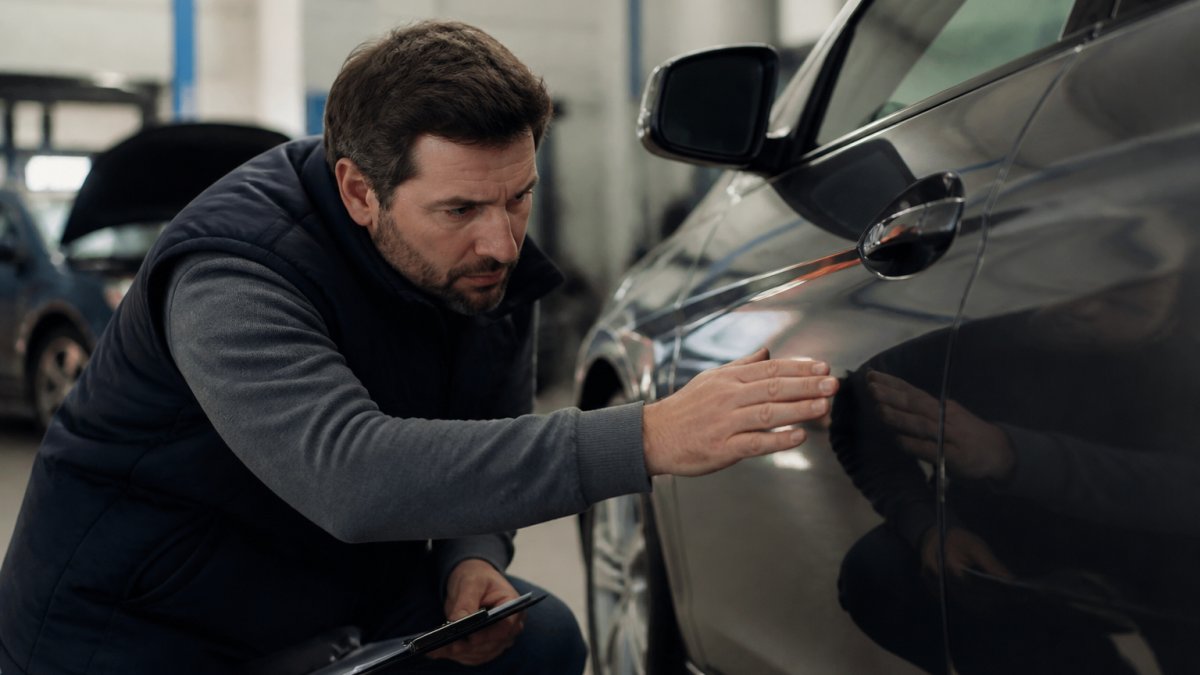
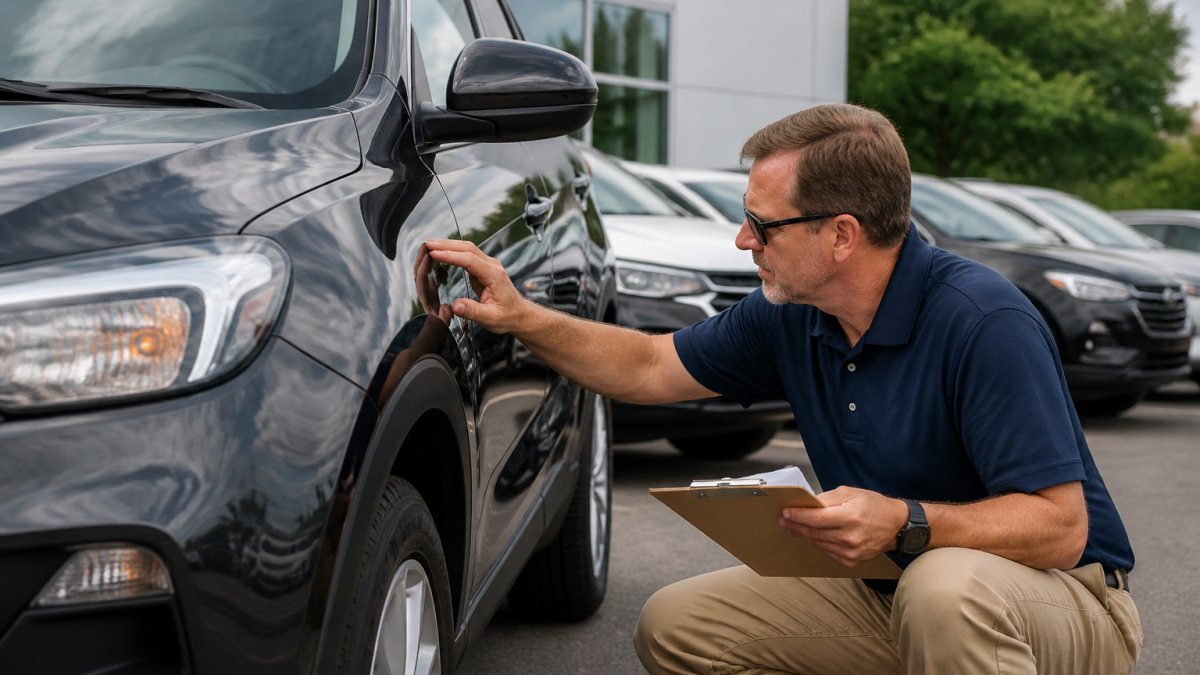
The appraiser then conducts a physical inspection, usually lasting 30 to 45 minutes, testing the engine, transmission, and braking system; checking odometer readings; inspecting tires and suspension; evaluating interior condition and electronics; documenting damage; and reviewing the vehicle history report.
How Inspection Findings Affect Your Offer
Each finding during inspection either supports or detracts from the baseline database value. Here's how dealers typically adjust offers:
Mechanical issues are the largest deductions. A transmission that slips might reduce the offer by $1,500 to $3,000, while engine problems or failed emissions tests can cut $500 to $5,000 from the baseline. The dealer estimates repair costs and deducts that amount from your offer.
Cosmetic damage typically results in smaller deductions. A single dent might reduce value by $100 to $300, while significant rust, multiple dents, or mismatched paint might total $500 to $1,500.
Tire condition is a straightforward calculation.
Title and history issues carry permanent penalties. A vehicle with a branded title (salvage, rebuilt, or flood) loses 20 to 40 percent of its baseline value immediately.
Reconditioning Costs and Dealer Margin
The dealer estimates reconditioning costs (detailing, repairs, paint touch-ups) typically ranging from $500 to $3,000, then factors in their profit margin. If your vehicle wholesales for $12,000 with $1,500 in reconditioning costs, the dealer's maximum offer is roughly $10,500, leaving room for margin and auction fees.
Using Online Valuation Tools to Verify Offers
Before your appraisal, run your own valuation using Kelley Blue Book, NADA Guides, or Edmunds. The "good" or "average" estimate typically aligns with trade-in value. Compare the dealer's offer to this estimate; if it's more than 10 percent lower, ask the appraiser to explain the gap with a detailed appraisal report.
Mileage, Age, and Mechanical Condition
These three trade-in value factors carry enormous weight in trade-in value calculations. A well-maintained vehicle with lower mileage commands significantly more than one with high miles and deferred maintenance.
Odometer Reading and Vehicle Age
The odometer reading directly impacts resale value. A five-year-old vehicle with 60,000 miles is worth substantially more than one with 100,000 miles. Age and mileage work together, a newer vehicle with higher mileage may hold value better than an older vehicle with lower mileage, depending on make and model. Newer model years attract more buyer interest and command premium prices.
Service History and Repair Costs
Your maintenance records directly influence the appraiser's confidence in your vehicle's reliability. Vehicles with complete service histories show proper care. Common expensive repairs that reduce value include engine or transmission problems, major suspension work, electrical failures, and air conditioning replacement. The dealer factors these costs into their offer.
Exterior, Interior, and Vehicle History
The condition of your vehicle's body, interior, and accident history shapes how buyers perceive it. Even mechanically sound vehicles lose value when cosmetic damage is visible.
Cosmetic and Structural Damage
Exterior damage (dents, scratches, rust, mismatched paint) signals poor maintenance and raises buyer concerns. Interior condition (worn upholstery, stains, odors, torn seats) reduces appeal. Structural damage (frame, flood, or fire damage) is most serious, dramatically reducing value and forcing wholesale sales.
Accident History and Title Status
A clean vehicle history report preserves value; accident history reduces it due to buyer concerns about hidden damage. A clean title is worth more than a salvage, rebuilt, or branded title. Vehicles with branded titles carry permanent value penalties. Check your vehicle's history using the VIN before appraisal.
Market Demand and Resale Potential
Current market conditions heavily influence trade-in offers. Trucks and SUVs typically hold value better than sedans. Vehicles with popular features (backup cameras, touchscreen infotainment, advanced safety systems) attract more interest. Seasonal demand also affects value, convertibles sell better in spring and summer, while all-wheel-drive SUVs see stronger demand in fall and winter. Local market conditions matter too; a truck in a rural area holds more value than the same truck in an urban center.
Car Trade-In Appraisal Checklist
Use this checklist to prepare your vehicle for appraisal and understand what dealers evaluate:
| Item | Condition | Notes |
|---|---|---|
| Odometer reading | _____ miles | Lower is better |
| Service records | Complete / Partial / None | Gather all receipts |
| Exterior damage | None / Minor / Significant | Note dents, scratches, rust |
| Interior condition | Clean / Fair / Poor | Check upholstery, odors, stains |
| Tires | Good / Fair / Worn | Tread depth matters |
| Brakes | Good / Fair / Needs work | Listen for noise |
| Engine/transmission | Smooth / Some issues / Problems | Note any warning lights |
| Electronics | All working / Some issues / Major problems | Check infotainment, climate control |
| Title status | Clean / Branded / Salvage | Affects value significantly |
| Accident history | None / Minor / Major | Check vehicle history report |
Before your appraisal appointment, wash your vehicle inside and out, clean the engine bay, remove personal items, and fix minor issues like burned-out headlights.
Trade-In vs. Private Sale
Trading in your vehicle offers convenience but typically yields lower offers than selling privately. A trade-in is fast and simple, the dealer handles all paperwork and liability, but dealers offer less because they assume reconditioning and resale risk. Selling privately generates higher offers but requires advertising, showings, and paperwork over weeks or months. Most people choose trade-ins for convenience despite lower payouts.
How to Negotiate a Trade-In Offer
Once you receive a trade-in offer, you have negotiating room, but only if you understand the full transaction structure.
Understanding Your Vehicle's Fair Market Value
Research your vehicle's fair market value using Kelley Blue Book, NADA Guides, and Edmunds; the "good" or "average" estimate typically reflects trade-in value. Check local market listings on AutoTrader, Facebook Marketplace, and Craigslist to see what similar vehicles are selling for. Document your findings, this research becomes your negotiating foundation.
Comparing Written Offers from Multiple Dealerships
Never accept the first offer. Visit at least two or three dealerships and request written appraisals. Request an itemized appraisal report showing the baseline value, specific deductions, estimated reconditioning costs, and final offer. Comparing itemized reports reveals which dealer is most fair, one dealer might deduct $800 for tires while another deducts $1,200, a red flag for padding.
Separating Trade-In Value from New-Car Price
Dealers often bundle the trade-in negotiation with the new-car purchase, creating confusion about which transaction is fair. A dealer might inflate the new-car price while offering a low trade-in, or vice versa. Negotiate separately. Establish the fair trade-in value using your research, agree on that number independently, then negotiate the new-car price as a separate transaction. When presented with a bundled offer, ask: "What is the new car's actual selling price before my trade-in credit?" This forces transparency.
Outstanding Loans and Negative Equity
If you still owe money on your current vehicle, your trade-in value must cover your outstanding loan balance to break even. Example: You owe $10,000 on a vehicle appraised at $9,500, creating $500 negative equity. The dealer pays off your loan but credits only $9,500 toward the new purchase; you're responsible for the $500 difference. Before appraisal, check your loan balance and calculate: Trade-in offer - Outstanding loan balance = Your net equity. If negative, you'll need to cover the shortfall.
Trade-In Tax Credits and Net Value
In many states, trade-in value reduces your sales tax liability on the new vehicle. Example: Trading in a $10,000 vehicle and purchasing a $30,000 car in a 7 percent sales tax state saves $700 in taxes ($2,100 without credit vs. $1,400 with credit). However, tax rules vary significantly by state, some don't allow trade-in credits at all. Research your state's rules before negotiating to avoid leaving money on the table.
Presenting Your Case and Pushing Back
When the dealer presents an offer that's below your research, ask them to explain their reasoning. Request a detailed appraisal report. Listen to their justification for any major deductions.
If you disagree with their assessment, present your evidence professionally:
- Show comparable sales from local listings
- Highlight your vehicle's service history and maintenance records
- Point out that the vehicle is mechanically sound (if true)
- Note if their deductions seem inflated compared to market rates
Dealers have flexibility in their offers. They'll improve numbers for customers who push back with credible research and a professional tone. If a dealer refuses to budge or becomes defensive, that's a signal to take your business elsewhere.
Frequently Asked Questions
What factors affect a car's trade-in value the most?
Mileage, vehicle age, mechanical condition, and market demand are the primary drivers of trade-in value. A lower odometer reading and recent model year typically command higher offers. However, a clean service history and accident-free vehicle history can offset higher mileage. Local market demand for your make and model also plays a significant role, popular vehicles in high demand retain value better than slower-selling models.
Should you fix your car before trading it in?
Minor cosmetic fixes like detailing and washing can help, but major repairs often don't pay for themselves in a higher trade-in offer. Dealers factor reconditioning costs into their appraisals, so they'll adjust their offer regardless. Focus instead on ensuring your maintenance records are complete and your vehicle is mechanically sound. Address any warning lights or obvious mechanical issues, but skip expensive repairs, dealers will account for needed work in their valuation.
Is it better to trade in a car or sell it privately?
Trading in offers convenience and simplicity, you handle one transaction at the dealership. Private sales typically yield higher resale value because you're selling directly to a buyer without dealer markup. However, private sales require more time, effort, and risk management. If you prioritize speed and hassle-free transaction, trade-in is ideal. If you want maximum value and have time to list and show your vehicle, private sale may net more cash, though the difference depends on your vehicle's condition and local market demand.
Can you negotiate trade-in value separately from the new car price?
Yes, and you should. Separate the trade-in negotiation from the purchase price of your next vehicle. Get a written appraisal of your trade-in value first, then negotiate the new car's price independently. This prevents dealers from offsetting a low trade-in offer with inflated new-car pricing. Ask for the trade-in offer in writing and compare it against online valuation tools and offers from other dealerships before accepting. Clear separation gives you leverage and transparency in both transactions.