 how-to
Avoiding Hidden Fees at Car Dealerships: A Buyer's Guide
Table of Contents
- Understanding Common Dealer Fees When Buying a Car
- Car Dealership Fees to Avoid: Negotiable vs. Non-Negotiable
- Reading Your Car Buyer's Order Fees Explained
- Calculating Your Car Buying Out-the-Door Price
- Car Dealership Fee Negotiation Script: What to Say
- State-Specific Fee Rules and Documentation Caps
- Avoiding Hidden Fees: Your Step-by-Step Action Plan
- Frequently Asked Questions
Last Updated: October 11, 2026
Understanding Common Dealer Fees When Buying a Car
When you walk into a dealership, the advertised price is just the starting point. The actual out-the-door price includes dozens of charges stacked on top of that number. Understanding which fees are mandatory and which ones you can negotiate separates savvy buyers from those who overpay.
Mandatory government charges
Government fees are non-negotiable. These include sales tax, title transfer fees, and registration costs. Sales tax rates vary by state. Title fees typically range from $50 to $200 depending on where you live. Registration fees depend on your vehicle's weight and your state's structure.
Some states cap documentation fees. A few states limit what dealers can charge for processing paperwork. Check your state's rules before you visit a dealership.
Government charges you'll always pay:
- Sales tax (state-specific percentage)
- Title transfer fee
- Registration and license plate fees
- Vehicle inspection fees (in some states)
Dealer-imposed fees
Dealer fees are where hidden charges hide. These include documentation fees, dealer preparation fees, market adjustment pricing, and optional add-ons. Many of these are negotiable or avoidable entirely.
Documentation fees cover paperwork processing. Dealers call these "doc fees." They typically run $75 to $500. Some states cap these. Others don't regulate them at all.
Dealer preparation fees cover vehicle cleaning and inspection before delivery. These usually cost $200 to $800. The work is minimal.
Car Dealership Fees to Avoid: Negotiable vs. Non-Negotiable
Not every charge on your buyer's order is set in stone. The key is knowing which fees have flexibility and which don't.
Documentation and dealer preparation fees
Documentation fees and dealer prep charges are among the most negotiable dealer fees. These aren't government mandates. They're revenue streams for the dealership.
Start by asking the dealer to itemize what's included in these fees. If the doc fee is $300, ask what work that covers. Often you'll find it's just paperwork filing and a quick inspection.
How to negotiate these fees:
- Request an itemized breakdown before you sign anything
- Compare quotes from multiple dealerships in your area
- Ask the dealer to reduce or remove the fee as part of your negotiation
- Get the final quote in writing before you commit
Many dealers will reduce or eliminate doc fees if you push back. They'd rather make the sale than lose you over $200. Dealer prep fees are similar.
Market adjustment pricing and add-ons
Market adjustment pricing appears when demand is high and inventory is low.
Market adjustments can run from $500 to $10,000 or more on hot models. You can negotiate this.
Dealer add-ons include paint protection, fabric protection, window etching, and alarm systems. These are optional products the dealer tries to bundle into your purchase.
Common add-ons to decline:
- Paint sealant or protection coating
- Fabric and leather protection
- VIN etching for theft prevention
- Extended warranties (see below)
- Dealer-installed alarm systems
- GPS tracking devices
These products cost the dealer $50 to $200 but sell for $500 to $2,000. You can buy equivalent protection elsewhere for less or skip it entirely.
Extended warranties and protection products
Extended warranties are insurance products. They cover repairs after the manufacturer's warranty expires. Dealers make significant profit on these.
A factory warranty typically covers three years or 36,000 miles. Extended warranties add two to five extra years of coverage.
Here's the problem: you don't know if you'll keep the car long enough to use it.
If you want extended coverage, buy it directly from the manufacturer or a third-party warranty company after you leave the dealership. You'll get better terms and lower prices.
Reading Your Car Buyer's Order Fees Explained
Your buyer's order is the contract that lists every charge. This document controls what you pay. Most buyers sign it without reading it carefully. That's a mistake.
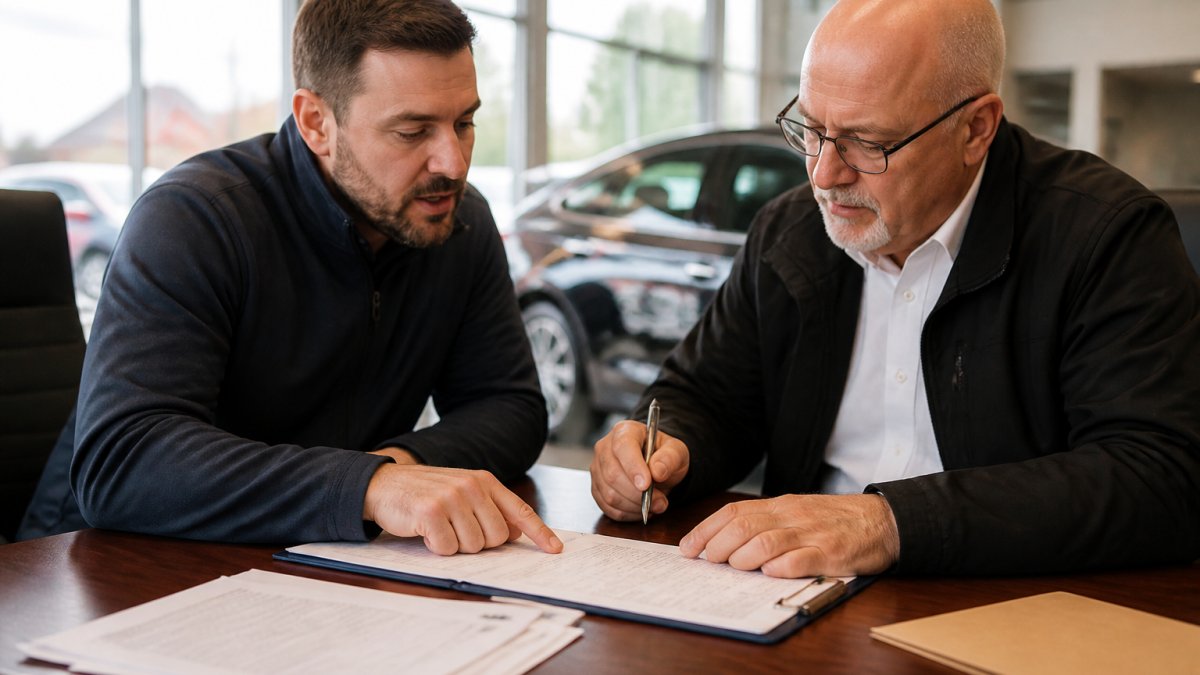
Line-by-line breakdown of itemized charges
The buyer's order breaks down into sections: vehicle price, trade-in value, taxes and fees, add-ons, and financing terms.
Start with the vehicle price. Confirm it matches what you negotiated. Check the trade-in value if you're trading in your current car.
Next, review every fee listed. You should see sales tax, title fee, registration fee, documentation fee, and dealer prep fee.
What to verify on your buyer's order:
- Vehicle sale price matches your negotiated price
- Trade-in value matches the appraisal
- All government fees are accurate for your state
- Documentation and dealer prep fees are itemized
- Add-on products are listed separately with prices
- Extended warranty is listed if you agreed to it
- Interest rate matches your loan approval
Take time reading this document. Don't let the dealer rush you. Ask questions about anything unclear. Request corrections before you sign.
Spotting unapproved or duplicate fees
Dealers sometimes slip unauthorized charges onto the buyer's order. You might see duplicate fees or charges you never agreed to. Catching these saves money.
Look for duplicate line items. Sometimes a fee appears twice under different names.
Watch for charges that weren't mentioned during negotiation. If you never discussed VIN etching, it shouldn't appear on your order.
Check the total. Add up all the charges yourself. Dealership math errors sometimes favor the dealer. A mistake in their favor is a mistake you'll pay for.
Calculating Your Car Buying Out-the-Door Price
The out-the-door price is what you actually pay. It includes the vehicle price, all fees, taxes, and add-ons. This is the number that matters when comparing deals.
What goes into the OTD price
The out-the-door price starts with the advertised vehicle price. Add your trade-in value (if applicable). Subtract the trade-in from the vehicle price.
Then add every single fee: documentation, dealer prep, market adjustment, government fees, taxes, and add-ons. This total is your out-the-door price before financing.
If you're financing, multiply the out-the-door price by your interest rate and loan term to get your monthly payment. Many buyers focus on monthly payment instead of total cost. This is a mistake.
Components of the OTD price:
- Vehicle sale price
- Trade-in value (subtracted)
- Sales tax
- Title and registration fees
- Documentation fee
- Dealer preparation fee
- Market adjustment (if any)
- Add-on products and warranties
- Dealer add-ons (etching, protection, etc.)
Comparing advertised price to total cost
The advertised price is often $5,000 to $15,000 lower than the out-the-door price. Dealers advertise the base vehicle price to draw you in.
When comparing vehicles across dealerships, always compare out-the-door prices, not advertised prices. A car advertised at $18,000 might cost $22,500 out the door at one dealer and $21,200 at another.
Request the out-the-door price in writing from each dealership you're considering. This gives you an apples-to-apples comparison. Don't rely on phone quotes. Get written estimates.
Car Dealership Fee Negotiation Script: What to Say
Knowing what to say when fees appear on your buyer's order gives you confidence. Here are scripts you can use.
Before you sign: questions to ask
Ask about every fee before you sign the buyer's order. Use these questions:
"Can you break down what's included in the $300 documentation fee?" This forces the dealer to justify the charge. Often they'll reduce it when pressed.
"I see a $600 dealer preparation fee.
"What is this $1,200 market adjustment? Is that negotiable?" Market adjustments are pure profit for the dealer.
"I didn't agree to VIN etching. Why is it on my order?" If you didn't approve an add-on, it shouldn't be there. Demand removal.
"Can you remove the extended warranty? I'm not interested in that product." Dealers hope you won't notice or won't speak up. Speaking up works.
Responses when a dealer resists removal
Some dealers will push back when you question fees. Here's how to respond.
If they say the fee is mandatory: "I understand this is your standard charge.
If they say the fee covers required work: "I appreciate the work.
If they say you agreed to the add-on: "I didn't authorize that product.
If they say other customers pay this: "Other dealerships offer better terms.
These responses are firm but professional. You're not being rude. You're being a smart buyer who reads contracts and negotiates terms.
State-Specific Fee Rules and Documentation Caps
Some states regulate dealer fees. Others don't. Knowing your state's rules gives you use.
Several states cap documentation fees. These caps typically range from $100 to $300.
A few states require dealers to disclose all fees upfront. Some states require written estimates before you sign. Check your state's regulations before you visit a dealership.
Federal law requires dealers to disclose the Monroney label (the manufacturer's sticker price) and the Buyer's Guide (disclosing warranty coverage). These disclosures protect you. Make sure you receive them.
Avoiding Hidden Fees: Your Step-by-Step Action Plan
Follow this process to avoid hidden fees and negotiate the best deal.
Step 1: Request an itemized quote before visiting
Call dealerships and request written quotes for the vehicles you're interested in. Ask for the out-the-door price including all fees and taxes. Get this in writing via email. Don't rely on phone quotes.
Compare quotes from three to five dealerships. Look at the out-the-door price, not the advertised price. This comparison shows you which dealers are charging high fees.
Step 2: Review the buyer's order carefully
When you arrive at the dealership, ask to review the buyer's order before you sign anything. Read every line. Confirm the vehicle price matches your negotiation. Verify all fees are accurate.
If anything doesn't match your agreement or the written quote, point it out immediately. Don't sign until corrections are made.
Step 3: Negotiate or decline add-ons
When the dealer presents add-on products, say no. You don't need paint protection, fabric protection, extended warranties, or VIN etching. You can buy these elsewhere for less if you want them.
If the dealer insists these are "required," ask to see that requirement in writing. Most aren't required. The dealer is trying to increase profit.
Step 4: Verify the final total before signing
Before you sign the buyer's order, verify the final total matches the written quote you received. If there are differences, ask why. Make sure any changes were discussed and agreed upon.
Get a copy of the signed buyer's order. Don't leave the dealership without it. This document proves what you agreed to.
Avoiding hidden fees at car dealerships starts with understanding what charges are mandatory and which ones you can negotiate. At AutoMatch USA INC, we believe every buyer deserves transparency.
Frequently Asked Questions
What fees should I avoid paying at a car dealership?
Avoid unnecessary dealer add-ons like VIN etching, window etching, paint protection, and fabric protection unless you genuinely want them. Many documentation fees, advertising charges, and dealer preparation fees are negotiable or can be removed entirely. Ask your dealer to itemize every charge and question anything you don't recognize. Extended warranties and insurance products are optional, decline them if you have existing coverage. Always verify that mandatory government fees (sales tax, title, registration) are correctly calculated.
Which dealership fees are negotiable?
Documentation fees, dealer preparation fees, advertising charges, market adjustment markups, and protection products are typically negotiable. Some dealers will reduce or waive these charges, especially if you're financing through them or paying cash. VIN etching, extended warranties, and dealer add-ons can almost always be declined. However, sales tax, title fees, and registration charges set by your state are fixed and non-negotiable. Always ask your dealer which fees they're willing to discuss before you sign.
How do I spot hidden fees on a car buyer's order?
Request a complete itemized quote before signing anything. Review each line item on your buyer's order and compare it to what was discussed. Look for unfamiliar charges, duplicate entries, or fees that weren't mentioned during negotiations. Common hidden fees include doc fees labeled differently, dealer preparation charges, advertising fees, and protection products added without your approval. If you see a charge you don't recognize, ask your dealer to explain it in writing. Never sign until every fee is accounted for and you understand the total out-the-door price.
Should I negotiate the out-the-door price or the monthly payment?
Always negotiate the out-the-door price first. The OTD price includes the vehicle cost, all dealer fees, taxes, title, and registration, everything you'll pay total. Focusing only on the monthly payment can hide a higher total cost spread across more months or at a higher interest rate. Once you've negotiated the lowest OTD price, then discuss financing terms and monthly payments. This approach ensures you're not paying inflated fees disguised in your payment schedule.